Treatments
Overview
Clinics
Overview
Questions, answered properly
Straight answers to the questions people actually ask, with the trial figures and the timeframes rather than vague reassurance.
Eligibility, the consultation, and what happens in the first week.
In UK private practice, treatment is usually considered at a BMI of 30 or above, or 27 or above alongside a weight-related condition such as type 2 diabetes, high blood pressure, sleep apnoea or raised cholesterol. BMI is the starting point rather than the decision. A clinician reviews your full history before anything is prescribed, and may decline if treatment is not appropriate.
You would not normally be prescribed a weight-loss medicine. Below that threshold the balance of benefit against side effects and cost no longer favours treatment, and a responsible prescriber will say so. Support with nutrition, strength work, sleep and alcohol is more useful at that point, and we will tell you honestly rather than sell you something.
You complete a medical questionnaire covering your weight history, current health, medicines, allergies and family history, then a UK-registered clinician reviews it. They confirm whether treatment is suitable, choose the medicine and starting dose, and flag anything needing attention first. If something in your history is unclear, they will come back to you before prescribing.
Most people complete the questionnaire in a few minutes and hear back from a clinician the same working day. Once a prescription is issued and dispensed, treatment is delivered free by next weekday courier. Timings slip if your history needs a follow-up question, or if blood results or a GP letter are needed first.
You are not charged for treatment that is not prescribed. The clinician explains why, and whether it is a permanent no or a not-yet, for example a medicine to review, a blood test to arrange, or a condition to stabilise first. If it is a not-yet, you can reapply once that is dealt with.
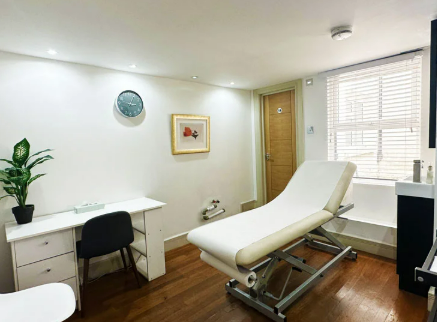
No. The consultation, check-ins and ongoing support can all be done remotely, with treatment delivered to your door. If you would rather be seen in person, we have London clinics in Marylebone and Harley Street where you can have a face-to-face review and body composition analysis.
We ask for your consent to notify your GP, and we recommend it. Your GP holds the rest of your record, which matters if your blood pressure or diabetes medicines need adjusting as you lose weight. You can decline, but tell us about every medicine and condition so prescribing stays safe.
What the medicines do, and what results look like in the trials.
They copy gut hormones released after eating. That slows how quickly the stomach empties, increases fullness and turns down appetite signals in the brain, so you eat less without white-knuckle willpower. Some also improve how the body handles blood sugar. They work alongside food and activity changes rather than instead of them.
In the SURMOUNT-1 trial of tirzepatide, participants lost an average of 20.9% of their body weight over 72 weeks, roughly 17 months, alongside diet and activity support. Semaglutide averaged 14.9% over 68 weeks in STEP 1. Averages hide a wide spread: some people lose considerably more, some much less.
Appetite usually changes within the first week or two, before the scales move much. Meaningful weight loss tends to show from week four onwards, and builds as the dose steps up over several months. If you have lost less than 5% of your starting weight by around month four on a full dose, it is worth reviewing the plan.
It depends on what you will actually stick to. The weekly injections have the larger trial results and one dose to remember. The tablets suit people who will not inject, but need a daily routine on an empty stomach with a small sip of water and a wait before eating. Adherence usually matters more than the format.
One group acts on a single gut hormone pathway, GLP-1. Another acts on two, GLP-1 and GIP, and produced larger average weight loss in its trials. There are also daily tablet options. The right choice depends on your health history, other medicines, tolerance of side effects and how you prefer to take treatment.
Yes. The medicine reduces appetite; it does not choose your food. Protein at every meal, resistance training twice a week and enough sleep protect muscle while you lose fat, which is what keeps the result durable. People who treat the medicine as the whole plan tend to regain more once it stops.
Your plan is adjusted rather than repeated. A clinician checks the dose, how long you have been at it, injection or tablet technique, protein intake, alcohol, sleep and any medicine that drives weight gain. If you are a genuine non-responder at a full dose, switching to a different medicine is often the right call.
Stepping up, missed doses, storage, travel and delivery.
Starting low and stepping up slowly is how nausea is kept manageable. The first dose is a tolerance dose, not a treatment dose, so do not judge results from it. Most schedules increase every four weeks if you are coping well. Holding a dose longer is a normal, safe adjustment, not a failure.
For weekly injections, take it as soon as you remember if fewer than four days have passed, then carry on with your usual day. If more than four days have passed, skip it and take the next one on schedule. For daily tablets, skip the missed dose and take the next one at your usual time. Never double up.
Yes, as long as at least three days, 72 hours, separate the last dose and the new one. Pick a day you will actually remember, then keep it consistent. Taking a dose early on a regular basis brings the doses too close together and usually means more nausea.
Stomach, thigh or the back of the upper arm, at least 5cm away from the navel. Rotate the site each week so the skin has time to recover. A small bump, a spot of blood or a bead of liquid at the site is common and does not mean the dose was lost.
Weekly injection pens are kept in the fridge between 2 and 8°C, away from the freezer compartment. Most pens can be kept at room temperature, below 30°C, for a limited period once in use, and the patient leaflet gives the exact figure for yours. A pen that has been frozen should not be used.
Yes. Carry pens in hand luggage in an insulated bag with a cool pack, never in checked baggage where they can freeze. Keep them in the original box with the pharmacy label, and take a copy of your prescription. Some countries want documentation for needles, so check the airline and destination rules before flying.
Used pens and needles go into a sharps bin, never household recycling or a bin bag. We supply a bin, and most councils and community pharmacies accept full ones. Keep the cap on the bin between uses and stop filling it at the marked line.
Treatment is dispensed by a GPhC-registered pharmacy and sent by tracked next-weekday courier at no extra cost, in temperature-controlled packaging with no clinic branding on the outside. You get tracking by email or text. Orders placed at a weekend are dispatched the next working day.
What is common, what is rare, and when to speak to a clinician.
Nausea, constipation, diarrhoea, burping, tiredness and a reduced appetite are the common ones. They are usually worst in the few days after a dose increase and settle as your body adapts. Smaller meals, less fat and alcohol, plenty of fluid and fibre, and a slower step-up all help.
Uncommon but important ones include pancreatitis, gallbladder problems, dehydration from prolonged vomiting, and low blood sugar if you also take insulin or a sulfonylurea. Severe, persistent stomach pain, especially with vomiting, needs urgent medical assessment. These medicines are not suitable in pregnancy or if you have certain thyroid cancer histories.
For most people the gut symptoms fade within a week or two of each dose change and settle once the dose is stable. If nausea is still stopping you eating or drinking normally after two weeks, that is a reason to hold the dose rather than push on. Speak to your clinician instead of stopping abruptly.
Message us if you cannot keep fluids down, if vomiting lasts more than a day, if you have severe stomach or shoulder-tip pain, signs of dehydration, or symptoms that worry you. Support runs seven days a week over WhatsApp. For chest pain, breathing difficulty or collapse, call 999.
Often yes, but it depends. Diabetes medicines, blood pressure treatment, thyroid replacement and warfarin may need monitoring or dose changes as you lose weight, and gut symptoms can affect how other tablets are absorbed. List everything you take, including supplements, so the prescriber can check interactions properly.
These medicines must not be used in pregnancy or while breastfeeding, and should be stopped in advance if you are planning to conceive; the required gap differs by medicine, so ask. Weight loss can restore fertility, and vomiting or diarrhoea can reduce how well the oral contraceptive pill works, so use reliable contraception throughout.
Some lean mass is lost in any significant weight loss, which is why the plan matters. Aim for roughly 1.2 to 1.6g of protein per kilogram of body weight a day and resistance training twice a week. Body composition analysis at our London clinics shows whether you are losing fat rather than muscle.
Rapid weight loss of any kind can trigger temporary shedding, usually two to three months after the fastest phase, and it typically recovers. It is a response to the rate of loss and low protein or iron rather than the medicine itself. Steadier loss, adequate protein and checking ferritin all help.
What is included, changing your plan, and NHS versus private.
The clinical review, your prescription, the medicine dispensed by a GPhC-registered pharmacy, needles where relevant, free weekday delivery, and clinician support between doses. There is no separate consultation charge. Prices differ by medicine and dose, and are shown in full on each treatment page before you commit.
Sometimes, but access is tightly rationed and waits are long. NHS prescribing runs through specialist weight management services with stricter criteria, and a phased rollout in primary care that prioritises the highest BMI and most weight-related conditions. Ask your GP first if cost is the deciding factor; going private is a choice about speed and access.
Yes, at any time, and there is no lock-in. Tell us before your next dispensing date and nothing further is sent or charged. Pausing is sometimes the clinically sensible option, for example around surgery or a difficult few weeks, and your clinician can advise on restarting at a suitable dose.
Prescription medicines cannot be resold or reused once they have left the pharmacy, so they cannot be returned for a refund. That is a legal requirement rather than a policy choice. If something arrives damaged, at the wrong temperature or is dispensed incorrectly, contact us and we will put it right.
Yes. Switching is common, usually because of side effects, cost, supply, or results that have stalled at a full dose. A clinician sets the starting dose for the new medicine rather than matching the old number, because the doses are not equivalent. There is no charge for the review.
Yes. You can request your consultation notes, prescription details and dispensing history at any time, and we will provide them. This is often useful for your GP, for travel, or if you move care elsewhere. Your data is handled under UK GDPR and we are registered with the ICO.
Prescribing is by UK-registered clinicians, and dispensing is by a GPhC-registered pharmacy, registration number 1039469. All medicines are UK-licensed and MHRA-regulated. We do not supply unlicensed or compounded versions, and we will not prescribe without a completed clinical review.
Tell us and we will investigate. Complaints are acknowledged within two working days and answered in full within twenty, and you can escalate to the GPhC if you are not satisfied with our response. We would rather hear about a problem early than have you stop treatment quietly.
Tapering, regain, and what maintenance actually looks like.
Long enough to reach a stable weight and build the habits that hold it, which for most people means twelve to eighteen months rather than a few weeks. Obesity is treated as a long-term condition, so some people stay on a lower maintenance dose. Your clinician reviews this with you rather than setting an arbitrary end date.
Some regain is likely if nothing else has changed; trial follow-up showed most participants regained a substantial share of lost weight within a year of stopping. That is why treatment should end with a plan rather than a full stop: a gradual taper, protein and strength work in place, and check-ins through the transition.
By stepping the dose down over several weeks instead of stopping suddenly, so appetite returns gradually and you can adjust portions as it does. There is no withdrawal reaction, but appetite rebound is real and easier to manage slowly. Your clinician builds the taper with you before you finish.
Either a lower ongoing dose or a medicine-free plan, depending on your weight history and how stable things are. Both include weighing weekly rather than daily, keeping protein and resistance training in the diary, and a check-in schedule so a 2kg drift is caught before it becomes 10kg.
Plateaus are normal. As you get lighter you burn fewer calories, and appetite adapts. Before assuming the medicine has stopped working, check whether the dose is at target, whether protein and portions have drifted, alcohol intake, sleep, and whether waist and body composition are still improving even if the scales are not.
In moderation, yes, though many people find they want it far less. Alcohol worsens nausea and reflux, adds calories that do not register as food, disrupts sleep and lowers blood sugar, which matters if you take insulin or a sulfonylurea. Heavy drinking also raises pancreatitis risk, so it is worth being honest about intake.
A clinician can answer your specific question, seven days a week. No obligation to start anything.
Quick self-check
Three quick questions. Takes under a minute.
Question 1 of 3
Your answers are confidential and reviewed by UK-registered clinicians.
WEIGHT LOSS
LONDON LOCATIONS
♢ UK-registered clinicians · Free weekday delivery